On guitar, major and minor pentatonic scales can appear as similar—or even identical—fretboard patterns. This can make them seem like one scale that simply starts on a different note.
But a fingering shows only where the notes are located.
The name of a pentatonic scale depends on its tonic and the intervals measured from that tonic. One shape can therefore represent different scales, while two shapes built from the same tonic can contain almost entirely different notes.
In this article, we will compare major and minor pentatonic scales, examine parallel and relative pairs, and learn how to choose a pentatonic scale for a chord.
The main difference
The major pentatonic scale uses this formula:
1–2–3–5–6The minor pentatonic scale uses:
1–♭3–4–5–♭7The main difference is the third:
3  = major quality
♭3 = minor quality
For example, starting from C:
C major pentatonic = C–D–E–G–A
C minor pentatonic = C–E♭–F–G–B♭Both scales have C as their tonic. The first contains E, the major third, while the second contains E♭, the minor third.
This single change has the strongest effect on the character of the scale.
Formulas side by side
| Scale | Formula | Notes from C | Characteristic degrees |
|---|---|---|---|
| C major pentatonic | 1–2–3–5–6 | C–D–E–G–A | 3 and 6 |
| C minor pentatonic | 1–♭3–4–5–♭7 | C–E♭–F–G–B♭ | ♭3 and ♭7 |
Only the tonic and fifth are shared:
C = 1
G = 5
The other degrees perform different functions.
In C major pentatonic:
D = 2
E = 3
A = 6
In C minor pentatonic:
E♭ = ♭3
F  = 4
B♭ = ♭7
Parallel major and minor pentatonic scales are therefore not minor variations of the same scale. They provide different sets of notes around a shared tonic.
How they sound
The major pentatonic scale is often described as open, clear, and gentle.
The minor pentatonic scale is commonly described as heavier, bluesier, or more rock-oriented.
These descriptions are useful for comparison, but they do not define the complete mood of the music. The result also depends on:
- the chords;
- rhythm;
- tempo;
- register;
- dynamics;
- melodic direction.
The same major pentatonic scale can sound calm, tense, or melancholic. A minor pentatonic scale does not always sound sad.
It is more reliable to listen for the intervals.
In the major pentatonic scale, the central triad tones are:
1–3–5In the minor pentatonic scale:
1–♭3–5The third immediately reveals whether the scale is connected to a major or minor chord.
Parallel pentatonic scales
Parallel pentatonic scales share the same tonic but contain different scale degrees.
For example:
C major pentatonic = C–D–E–G–A
C minor pentatonic = C–E♭–F–G–B♭
Their shared tonal center is C.
C major pentatonic naturally fits a C major chord:
C major chord      = C–E–G
C major pentatonic = C–D–E–G–A
C minor pentatonic naturally fits a C minor chord:
C minor chord      = C–E♭–G
C minor pentatonic = C–E♭–F–G–B♭In both cases, every note of the triad is already present in the corresponding scale.
Comparing parallel pentatonic scales is one of the clearest ways to hear the difference between the major and minor thirds.
Relative pentatonic scales
Relative major and minor pentatonic scales contain the same notes but have different tonics.
For example:
C major pentatonic = C–D–E–G–A
A minor pentatonic = A–C–D–E–G
The note collection is identical:
A–C–D–E–GMeasured from C, the notes produce the major pentatonic formula:
C–D–E–G–A
1–2–3–5–6
Measured from A, they produce the minor pentatonic formula:
A–C–D–E–G
1–♭3–4–5–♭7The note positions on the fretboard do not change. Only their functions change.
Why the same notes can sound different
A group of notes does not exist independently from the harmony.
Consider this note collection:
A–C–D–E–GOver an Am chord, the stable notes are:
A–C–EA becomes the tonic, and C functions as the minor third. We hear A minor pentatonic.
Over a C chord, the stable notes become:
C–E–GC now acts as the tonal center, while E functions as the major third. The same note collection is heard as C major pentatonic.
The perceived center is influenced by:
- the backing chord;
- the first note of the phrase;
- the note where the phrase ends;
- rhythmic accents;
- frequently repeated notes.
A scale is therefore more than a list of notes. It is a set of notes organized around a tonic.
One fingering, two scales
A common A minor pentatonic position around the fifth fret contains:
A–C–D–E–GThe same fretboard pattern can also function as C major pentatonic.
For A minor pentatonic, the notes have these functions:
A = 1
C = ♭3
D = 4
E = 5
G = ♭7
For C major pentatonic:
C = 1
D = 2
E = 3
G = 5
A = 6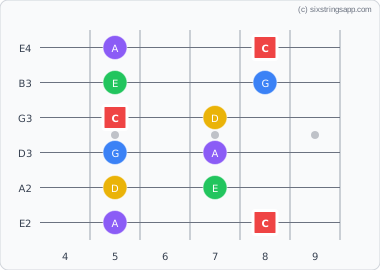
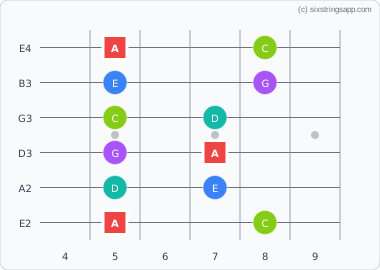
The mistake is to treat the pattern as a scale by itself.
The pattern shows where the notes are. To identify the scale, you need to find the tonic and understand the function of each degree.
How to identify the scale inside one fingering
Ask three questions.
Where is the tonic?
For A minor pentatonic, find every A.
For C major pentatonic, find every C.
Which notes belong to the current chord?
Over Am:
A–C–EOver C:
C–E–GWhere do the phrases resolve?
When a melody repeatedly returns to A, the note collection is heard as A minor pentatonic.
When it returns to C, it is heard as C major pentatonic.
These three questions are enough to stop treating the pentatonic scale as nothing more than a guitar box.
How to choose a pentatonic scale for a chord
A direct match is the clearest place to begin.
Over a major chord, use the major pentatonic scale with the same tonic:
C major chord      = C–E–G
C major pentatonic = C–D–E–G–A
Over a minor chord, use the corresponding minor pentatonic:
C minor chord      = C–E♭–G
C minor pentatonic = C–E♭–F–G–B♭| Chord | Pentatonic scale | Chord tones inside the scale |
|---|---|---|
| C | C major pentatonic | C–E–G |
| Cm | C minor pentatonic | C–E♭–G |
| A | A major pentatonic | A–C♯–E |
| Am | A minor pentatonic | A–C–E |
This is not the only possible choice, but it is the easiest one to understand.
It immediately connects the scale with the chord tones.
Minor pentatonic over a major chord
In blues and rock, musicians often play a minor pentatonic scale over a major chord or dominant seventh chord with the same root.
For example:
A minor pentatonic = A–C–D–E–G
A7 chord           = A–C♯–E–G
This places two different thirds against each other:
C  = ♭3
C♯ = 3The result is a characteristic blues tension.
C does not become completely stable over A7. You can:
- use it as a passing note;
- bend it toward C♯;
- alternate it with the major third;
- resolve it to A or E.
This combination works not because minor pentatonic is a neutral match for the major chord, but because the conflict between the two thirds has become part of the blues language.
Mixing major and minor pentatonic scales
In blues, rock, country, and funk, musicians often combine parallel major and minor pentatonic scales.
For example, from A:
A major pentatonic = A–B–C♯–E–F♯
A minor pentatonic = A–C–D–E–G
The most important pair is:
C–C♯
♭3–3The major third reinforces the major chord. The minor third creates blues tension.
Simply combining both scales, however, produces a large note collection. To make the result sound intentional, you need to follow the current chord and control how both thirds are used.
It is better to hear each pentatonic scale clearly on its own before combining them.
Which degrees provide stability
In the major pentatonic scale:
1–3–5form the major triad.
In C major:
C–E–GThe second and sixth create movement:
D = 2
A = 6
In the minor pentatonic scale:
1–♭3–5form the minor triad.
In A minor:
A–C–EThe fourth and minor seventh add characteristic color:
D = 4
G = ♭7
You do not need to end every phrase on a triad tone. But these notes create the clearest connection between the melody and the chord.
How to see the difference on the fretboard
Open the Fretboard Explorer and select C major pentatonic.
Switch to interval labels:
1–2–3–5–6Find:
1
3
5
Then select C minor pentatonic:
1–♭3–4–5–♭7Compare the positions of the thirds:
3
♭3
Next, open A minor pentatonic. Its notes will match C major pentatonic, but the interval labels will change.
This reveals two different relationships:
C major pentatonic ↔ C minor pentatonic same tonic, different notes
C major pentatonic ↔ A minor pentatonic same notes, different tonics
How Six Strings App can help
In the Fretboard Explorer, you can compare pentatonic scales across the entire fretboard, switch between note names and intervals, and locate the tonics inside each position.
In Chords, Arpeggios, and Scales, you can open a chord and check which major or minor pentatonic scales contain its main chord tones.
The Scale Map lets you compare formulas, find shared scale degrees, and move between related scales.
Exercise: major and minor pentatonic from the same tonic
Choose A as the tonic.
Play A major pentatonic:
A–B–C♯–E–F♯Then play A minor pentatonic:
A–C–D–E–GStart by playing only the triads:
A  = A–C♯–E
Am = A–C–E
Then add the remaining notes of each pentatonic scale.
In major phrases, emphasize:
A–C♯–EIn minor phrases:
A–C–EThe main goal is to hear the difference between the major and minor thirds.
Exercise: one note collection with two tonal centers
Use:
A–C–D–E–GFirst, play over Am and resolve your phrases to:
A–C–EThen play over C and resolve to:
C–E–GThe fingering stays the same. Only the tonic and chord tones change.
This lets you hear the difference between A minor and C major pentatonic without moving your hand.
Common mistakes
Confusing parallel and relative pentatonic scales. C major and C minor pentatonic share the same tonic but contain different notes. C major and A minor pentatonic contain the same notes but have different tonics.
Treating a fingering as a scale by itself. A pattern shows the position of the notes. The tonic and scale-degree functions determine the name of the scale.
Thinking of major pentatonic only as a minor shape shifted by a few frets. This can help you find the fingering, but it does not explain the sound. Find the tonic and major third inside the major pentatonic pattern.
Always starting from the lowest note in the box. The lowest note in a position is not necessarily the tonic.
Treating every scale degree in the same way. The tonic, third, and fifth create the clearest connection between the scale and the chord.
Treating minor pentatonic as a neutral choice over a major chord. In blues, it creates deliberate tension between the minor and major thirds.
Combining both pentatonic scales too early. Without understanding their functions, you get a large note collection without a clear center.
What to study next
- What Is a Pentatonic Scale? — the basic structure of a five-note scale and its fretboard layout.
- What Is a Scale Degree? — scale-degree numbers and functions.
- Major vs Minor — the role of the major and minor thirds.
- Relative Keys — the same notes organized around different tonics.
- Parallel Keys — the same tonic with different pitch collections.
- How to Use the Pentatonic Scale in Improvisation — moving from scale patterns to musical phrases.
- Fretboard Explorer — compare pentatonic scales across the entire fretboard.
Short summary
The major pentatonic scale uses the formula 1–2–3–5–6. The minor pentatonic scale uses 1–♭3–4–5–♭7. Their main difference is the major or minor third.
Parallel pentatonic scales share a tonic but contain different notes, as in C major and C minor pentatonic. Relative pentatonic scales contain the same notes but have different tonal centers, as in C major and A minor pentatonic.
On guitar, one fingering can represent different scales. To understand which pentatonic scale you are hearing, find the tonic, the third, and the notes of the current chord.